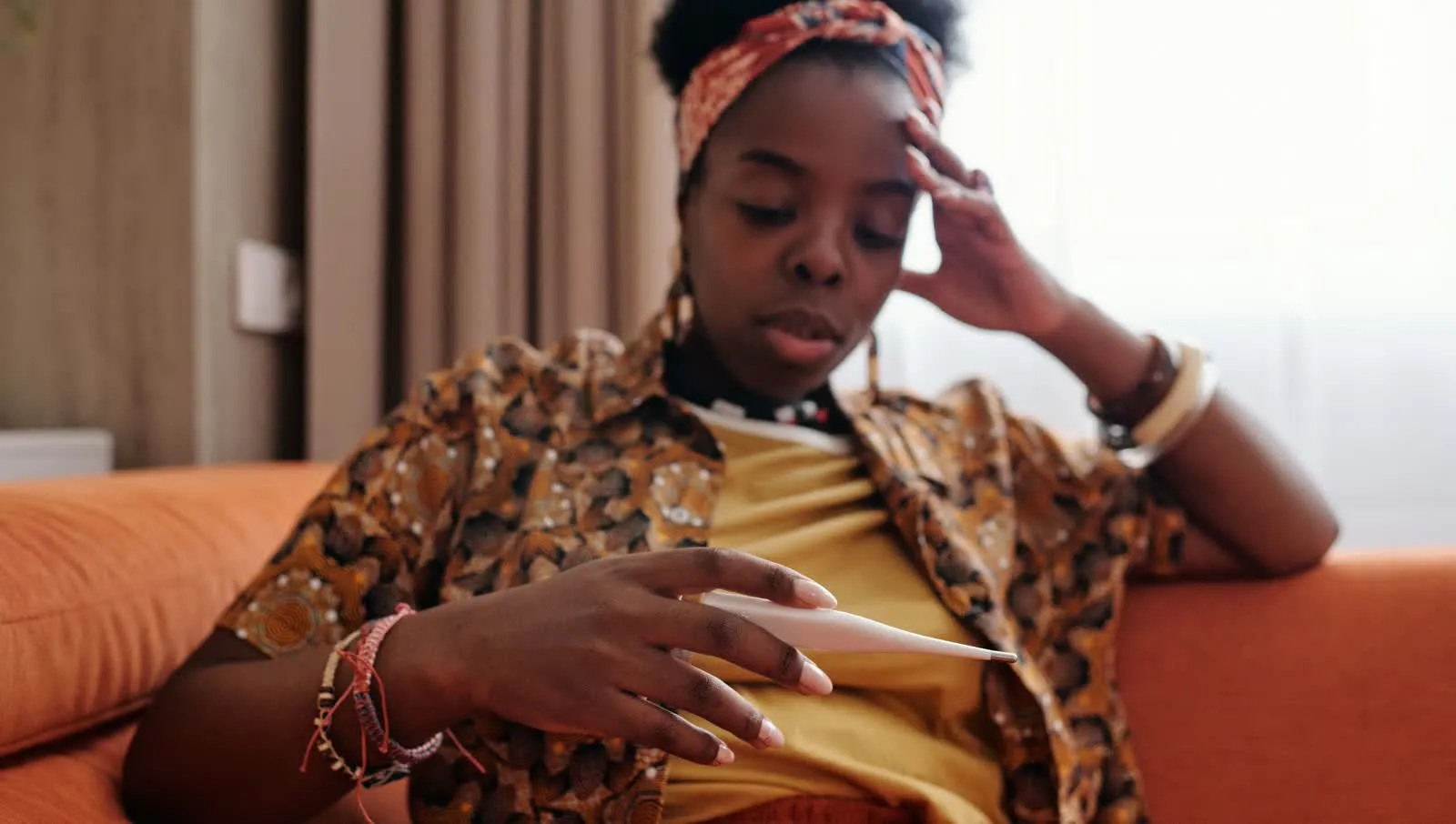
You can't tell malaria and typhoid apart just by how you feel. Both start with fever, headache and weakness, so you need a test to show which one you have. Malaria tests are simple and accurate, but the typhoid test many people in Nigeria get, a single Widal test, often gives a false positive.
| Malaria | Typhoid |
|---|
| Cause | A parasite | A type of bacteria called Salmonella Typhi |
| How it spreads | Bites from infected mosquitoes | Food or water that carries the germ |
| How it starts | Fever, chills and headache, usually 10 to 15 days after the bite | High fever for days, with tiredness, headache, stomach pain, and constipation or diarrhoea |
| The right test | A rapid malaria test, or a blood film under a microscope | A blood culture |
| Treatment | Malaria medicines called ACTs | Antibiotics |
What is the difference between malaria and typhoid?
Malaria comes from a parasite that infected mosquitoes pass on when they bite you. It doesn't spread from person to person. Typhoid comes from a germ that you swallow in food or water. Most of its symptoms look like malaria, but some people with typhoid also get a rash.
Can you have both at the same time?
Yes, but less often than people think. When scientists studied 810 people with fever at a teaching hospital in Enugu, only about 1 in 7 had typhoid or paratyphoid, a similar illness. People with malaria were no more likely to have typhoid than people without it. But about half of the people with malaria tested positive on a Widal test without having typhoid.
Many labs offer a test for "malaria and typhoid". If the typhoid part is a Widal test, a positive result could just mean you have malaria.
Which test should you ask for?
For malaria, ask for a rapid malaria test or a blood film, which many labs call an MP test. WHO says every suspected case should be confirmed with one of these, and Nigeria's guidelines say to test before treating.
For typhoid, the reliable test is a blood culture. The lab takes some of your blood and tries to grow the germ from it. The Widal test only looks for your body's reaction to the germ, so it can't tell a new infection from an old one or from a past typhoid vaccine. In another study, in Benin City, only about 1 in 6 positive Widal tests turned out to be typhoid.
If the hospital can't do a blood culture, don't let a positive Widal alone decide whether you take antibiotics. Yes, anyone with real typhoid needs antibiotics. But if you take antibiotics you don't need, you're helping germs grow resistant to them, so the same medicine may fail when you really need it.
When should you go to hospital?
Go to hospital at once if someone with a fever:
- is confused or hard to wake
- has fits, also called seizures
- finds it hard to breathe
- passes dark or bloody urine
- has yellow eyes or skin
- is bleeding in a way you can't explain
These are signs of severe malaria. Children under five and pregnant women get severe malaria more easily, so get them tested as soon as you notice a fever.
Typhoid can also become serious, and even kill, if it isn't treated early. So if you still have a fever after a negative malaria test, see a doctor.