About 3 million adults aged 20 to 79 in Nigeria had diabetes in 2024.
There are three main types of diabetes:
- Type 2 affects how the body uses sugar for energy. Worldwide, more than 95 in 100 people with diabetes have this type. It used to be called adult-onset diabetes, but it now also affects children.
- Type 1 means the body makes too little insulin, so people need insulin every day. It used to be called childhood diabetes. About 59,000 Nigerians live with it, including about 18,000 under the age of 20.
- Gestational diabetes is high blood sugar that starts in pregnancy. In Nigeria it affects about 12 in 100 pregnancies.
How many people in Nigeria have diabetes?
The IDF Diabetes Atlas says about 3 in 100 adults in Nigeria have diabetes. Nigeria has more adults with diabetes than any other country in sub-Saharan Africa, and the number is expected to reach 6.6 million by 2050.
Across sub-Saharan Africa, about 25 million adults have diabetes. That's 1 in 20.
The real number in Nigeria may be higher. These figures are based on an older national survey, done from 2005 to 2007, which only tested people aged 40 and over.
A recent review of 60 Nigerian studies found more: about 7 in 100 adults had type 2 diabetes. The South-South had the most, about 11 in 100. The North-Central had the fewest, about 2 in 100.
A newer national survey from 2023 and 2024 didn't test blood sugar. But it found that only about 1 in 5 adults had ever had a blood sugar check. In the same survey, only about 1 in 100 had ever been told they have diabetes.
Studies count in different ways, so their numbers differ. But they agree that diabetes is common, and most people who have it don't know.
How many people with diabetes don't know they have it?
Most of them. About 78.7% of Nigerian adults with diabetes, about 2.4 million people, haven't been diagnosed. Sub-Saharan Africa has the highest share of undiagnosed diabetes of any world region.
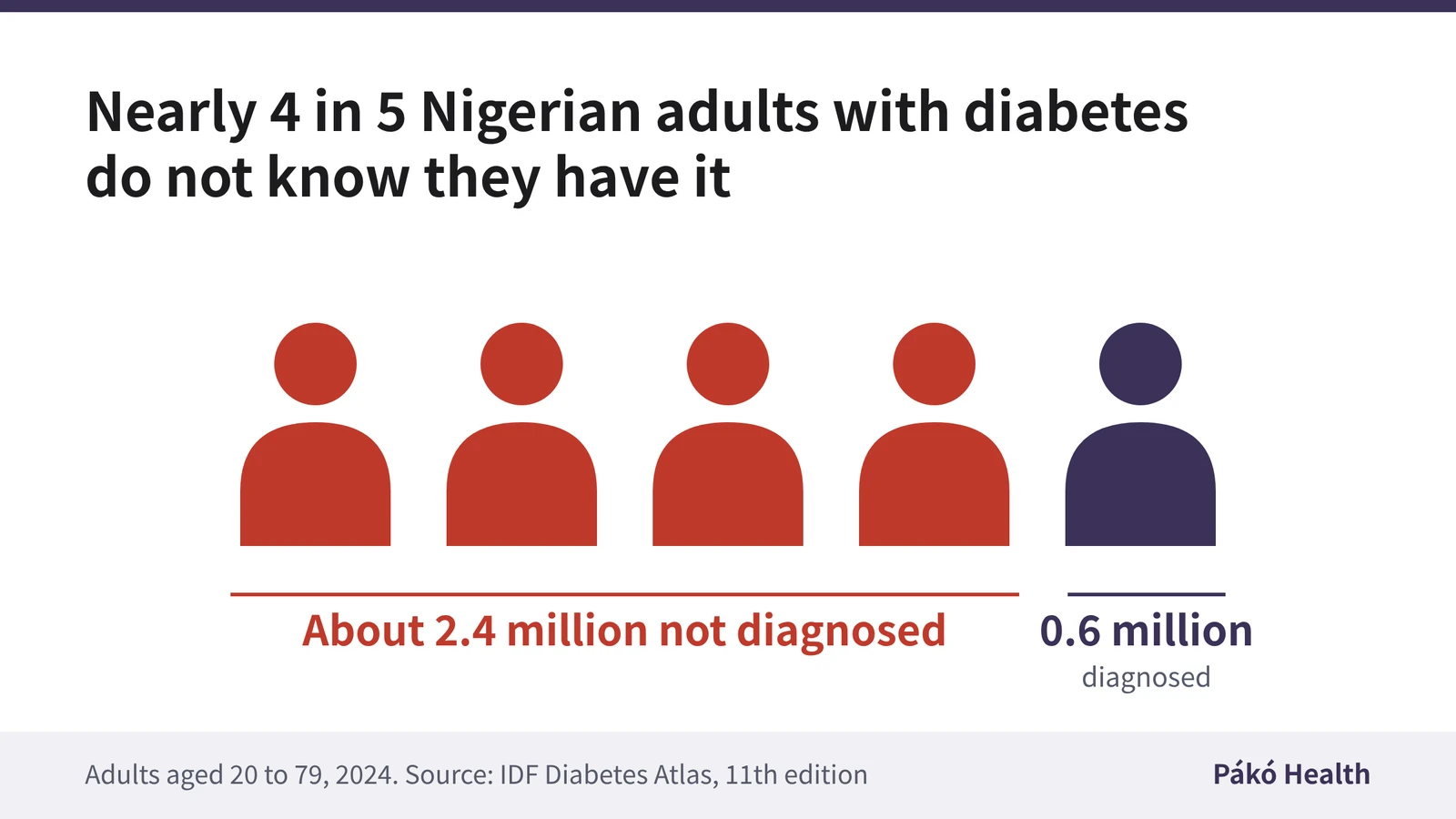
Figures from the IDF Diabetes Atlas
About 9.5 million Nigerian adults also have blood sugar above normal but not yet in the diabetes range. Diabetes caused about 41,000 adult deaths in 2024.
What are the early signs of diabetes?
Often there are none. That's why diabetes is known as a silent killer. The WHO says type 2 diabetes symptoms can be mild and take years to notice. Watch for:
- feeling very thirsty
- passing urine more often than usual
- feeling tired
- blurred vision
- losing weight without trying
- cuts or wounds that heal slowly
Don't wait for signs. A Nigerian review found that these raise the risk of type 2 diabetes:
- diabetes in the family
- little or no exercise
- being overweight
- a big belly (fat around the waist)
- rarely eating vegetables
- living in a city
- being better off
If any of these fit you, get tested, and have your blood pressure checked at the same time. If you already have diabetes, read how to eat garri and other swallows in smaller portions.
Where can you get tested and what does it cost?
A blood sugar test needs only a small blood sample, and the WHO calls it relatively inexpensive.
- Labs and clinics. A fasting blood sugar test cost ₦2,500 through a Lagos app, ₦4,200 at one clinic chain and ₦7,300 at a large lab. Ask the lab how long to stop eating before the test.
- Screening events. Many groups hold screening events around World Diabetes Day on 14 November. The IDF events page lets you search by country.
One high reading isn't a diagnosis. If your result is high, see a doctor for a second test.