In early November, at least two people died in Oju, Benue State, after drinking a herbal mixture that was allegedly bought at a local market. Others went to hospital. Nobody has yet said what was in it.
For many of us, agbo is something we grew up with. It may be a family recipe, or a bottle from a seller we have trusted for years. So when you buy agbo for "infection", it is fair to ask two questions. What is inside it, and will it work?
What is an infection?
An infection happens when germs, such as bacteria, viruses, fungi or parasites, get into the body and multiply. Malaria and typhoid are infections, and so is a cold. In Nigeria, people use the word for many different illnesses.
This article is about one common use: agbo sold for infections of the private parts and the urine, including agbo atosi, the agbo sold for gonorrhoea. A sexually transmitted infection (STI) can cause a discharge from the vagina or penis, or sores around the genitals or anus. Other problems, such as a urine infection or a yeast infection, can feel similar. Each one needs a different treatment, and a test can show which one you have.
What is in agbo for infection?
Agbo comes in many forms. Some is boiled at home or mixed by a herbalist from a family recipe. Some is made by companies and sold in labelled bottles with a list of ingredients. In one Lagos survey, people used both kinds.
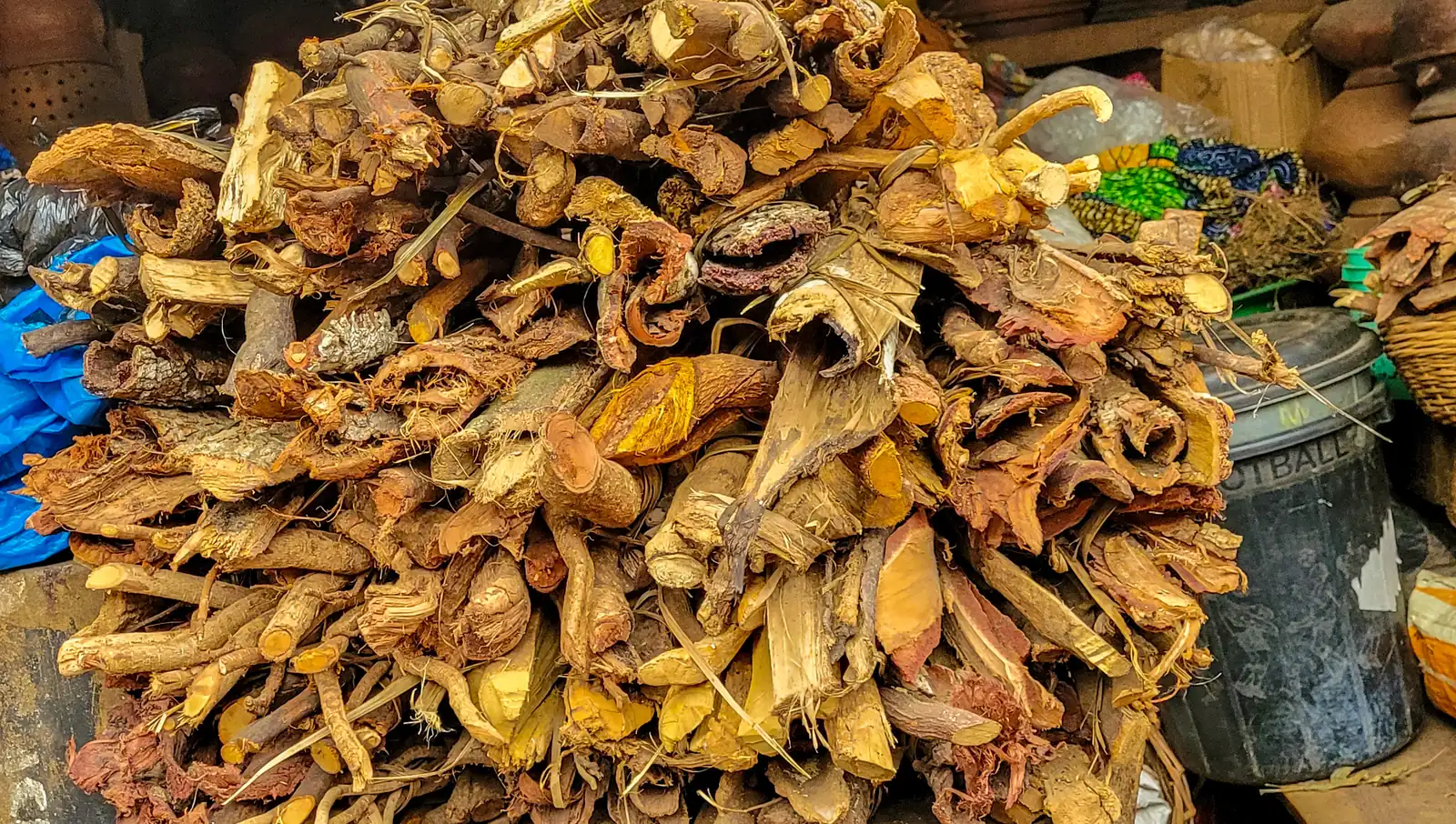
The recipes vary widely. In a survey in Ibadan, 300 people described 52 herbal recipes for gonorrhoea, syphilis, yeast infections, vaginal infections and even HIV. They used roots, bark and leaves, boiled in water, ground into powder or soaked in alcohol.
With an unlabelled mixture, you often can't know exactly what went into the bottle. Even with a labelled product, the strength of each plant can change from batch to batch. It depends on the soil, the harvest and how the plants are stored. That matters, because with plants, as with all medicines, the dose decides whether something helps or harms you.
Does agbo treat STIs or urine infections?
There is no proof that it does. We could not find a single study in people showing that agbo cures gonorrhoea, chlamydia, syphilis or a urine infection.
Some plants do kill germs in the lab. In one Nigerian study, an alcohol extract of scent leaf stopped the growth of germs that cause urine infections, such as E. coli, in a lab dish. But a lab dish is not a human body. The study used a measured extract. A cup of agbo holds an amount that nobody has measured precisely, and it changes from bottle to bottle. To clear an infection, you need the right medicine at the right dose for the right number of days. If not, some germs can survive and become harder to treat.
You may feel better for a while, because symptoms often come and go. The germ can still stay in your body and pass to your partner. According to the World Health Organization, most STIs cause no symptoms, and poorly treated gonorrhoea and chlamydia are major causes of infertility in women.
Is agbo safe?
"The fact that it's natural doesn't mean that it's all safe," NAFDAC's director general said in 2025. NAFDAC lists thousands of herbal products after safety tests, but only a few have done the clinical trials to show they work. Agbo mixed and sold by hand has usually had neither.
Agbo can also carry germs of its own. When researchers in Ibadan tested 8 bottles of agbo for fever and piles from 4 markets, the bacteria counts were above the safe limits used for herbal medicines in Europe.
Researchers have also warned that some herbal medicines sold in Africa have hidden prescription drugs added to them. One example is drugs for weak erection, sometimes at high doses. You can't see this by looking at the bottle.
Herbal mixtures can also hurt your kidneys. Doctors in South West Nigeria described 53 people whose kidneys failed after herbal mixtures, most of them taken for a fever. 39 of them had yellow eyes or skin, 45 needed dialysis, and 3 died.
What should you do instead?
Go to a clinic or see a doctor and ask for a test. A urine test or a swab can show what is causing your symptoms. Gonorrhoea, chlamydia, syphilis and trichomoniasis can all be cured with the right antibiotics, often with a single dose. Your partner needs treatment too, or the infection can come back to you.
Don't buy antibiotics without a test either. The wrong one won't cure you, and it helps germs become resistant.
So, if your symptoms keep coming back after agbo, get tested this week. Most of these infections can be cured once you know which one you have.