What Is Dopamine and What Does It Do?
Dopamine is not the pleasure chemical. It is closer to a prediction and motivation agent. Understanding the difference changes what you can do about your habits.
Dopamine is not the pleasure chemical. It is closer to a prediction and motivation agent. Understanding the difference changes what you can do about your habits.
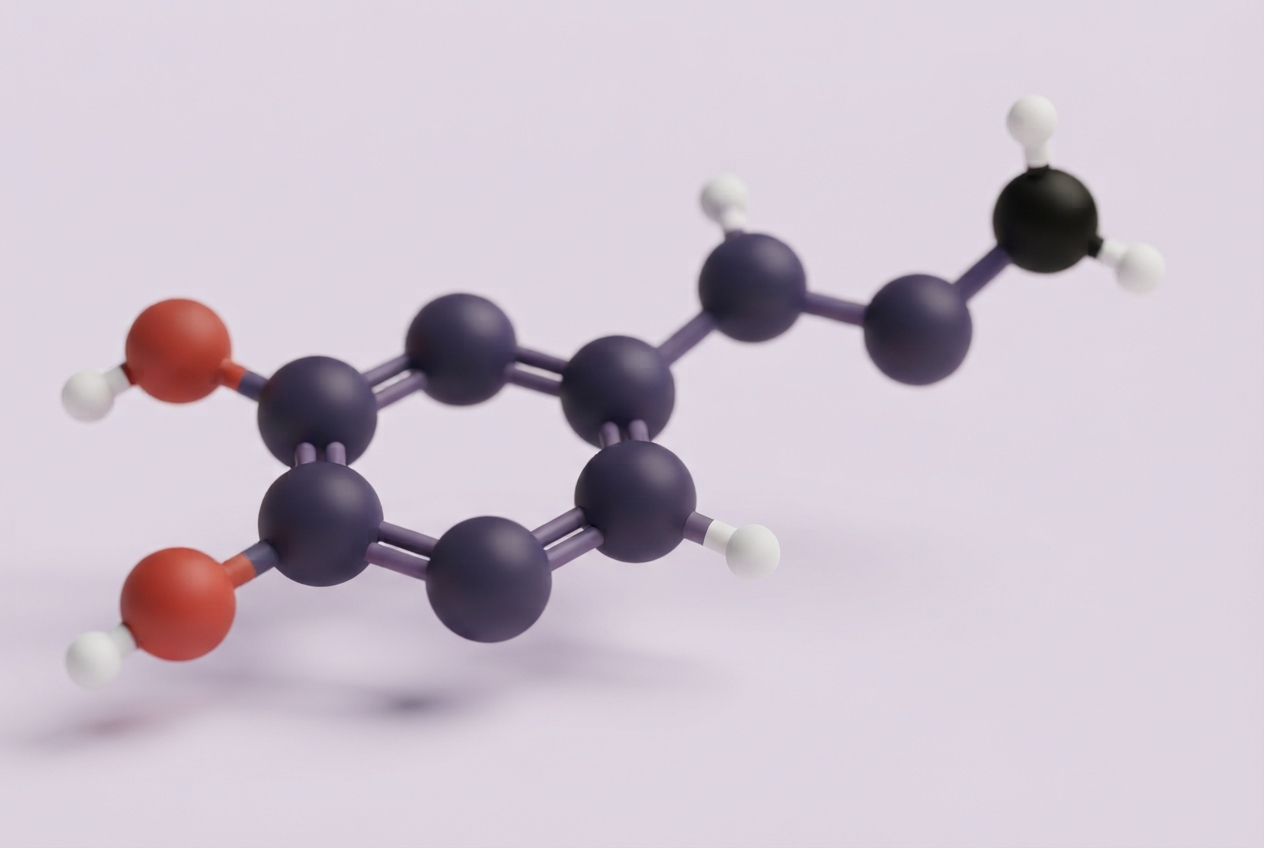
The single most repeated claim about dopamine is that it makes you feel good. Research does not support this claim.
Neuroscientists have separated two things that usually happen together: wanting something and liking it. They come from different brain systems. Work by Berridge and Robinson showed that animals with their dopamine systems turned off still seem to enjoy a sweet taste.
So they can still feel pleasure. They just stop pursuing it.
Dopamine is about pursuing. Enjoyment largely relies on other signalling, particularly the opioid and endocannabinoid systems.
This is why the popular "pleasure chemical" framing fails in practice. People describe compulsive behaviours they no longer enjoy, like picking up a phone without thinking, or scrolling for hours just to get annoyed on Twitter. Wanting and liking have separated, and dopamine is on the wanting side.
The finding that reorganised this field came from scientists recording dopamine neurons in monkeys while the monkeys learned that a sound meant juice was coming. A sound like that is called a cue, meaning a signal that tells you something is about to happen.
Schultz, Dayan and Montague found three patterns:
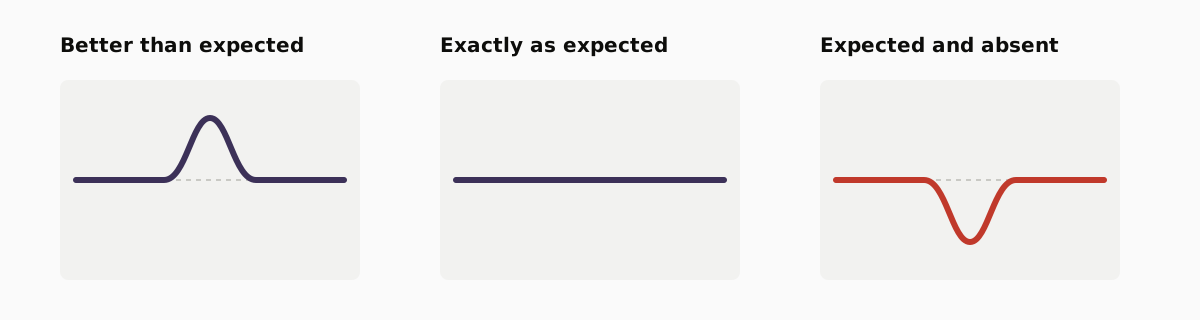
Dopamine is not reporting how good something is. It is reporting the gap between what was expected and what happened. Neuroscientists call this reward prediction error.
As you learn which cue predicts the reward, the dopamine response moves backwards in time, from the reward to the cue. That is why the sound of a notification often gets a stronger response from you than the message it announces. The cue has taken over the signal.
Once a behaviour is well learned, control shifts within the brain's cortico-striatal circuits, from regions that plan towards regions that execute. Brain activity that was spread across the whole sequence concentrates at its start and end, and the middle runs without supervision.
This is why a habit feels different from a decision. Nothing is being decided. The cue starts the habit, and dopamine's role has shifted from the reward to the cue.
For anyone trying to change a behaviour, that has a practical consequence. Intervene at the cue. By the time the reward arrives, the sequence has already run.
Dopamine neurons are concentrated in the midbrain, principally the ventral tegmental area and the substantia nigra pars compacta. Researchers have identified around ten distinct dopamine populations, including neurons in the hypothalamus, the olfactory bulb and the retina.
Out of these, four pathways affect your behaviour the most.
|
Pathway |
From |
To |
What it does |
|---|---|---|---|
|
Mesolimbic |
Ventral tegmental area |
Nucleus accumbens |
Motivation, reward learning, pursuit |
|
Mesocortical |
Ventral tegmental area |
Prefrontal cortex |
Attention, working memory, planning |
|
Nigrostriatal |
Substantia nigra |
Dorsal striatum |
Movement and procedural learning |
|
Tuberoinfundibular |
Hypothalamus (arcuate nucleus) |
Pituitary gland |
Suppresses prolactin release |
The nigrostriatal pathway degenerates in Parkinson's disease, a movement disorder that also affects cognition, motivation and mood. In that disease, the main problem is that there is too little dopamine. But it is also possible to have too much dopamine.
For example, prefrontal dopamine follows an inverted U. Too little dopamine impairs working memory and attention. Too much impairs it as well. There is an optimum middle ground, and you cannot always reach it by adding more dopamine. This is one reason stimulants (which raise dopamine) will help some people and hurt others.

Dopamine is both a hormone and a neurotransmitter. The difference lies in where it is acting rather than in the molecule itself.
In the brain, it mostly behaves as a neurotransmitter, released across a synapse and acting over a very short distance and a very short time.
In one part of the brain called the hypothalamus, it behaves as a hormone. Neurons release it into the small portal blood system that runs from the hypothalamus to the pituitary gland, where its principal job is to suppress the release of prolactin. This matters in practice. Antipsychotic drugs block dopamine receptors, and blocking them can raise prolactin, so some people taking these drugs start producing breast milk without breastfeeding. And this can happen in both women and men.
A large share of the body's dopamine has nothing to do with mood. Around 42 to 46 per cent of dopamine production happens in mesenteric organs, meaning the organs in your belly, and mostly in the gut.
Dopamine also acts on the kidneys, where it increases sodium excretion and urine output, and circulates largely in an inactive conjugated form. It is given as a drug in intensive care too, where it supports blood pressure and cardiac output in shock.
One point here affects every supplement and diet claim you will ever see: dopamine does not cross the blood-brain barrier. Dopamine made in your gut does not reach your brain. Neither will dopamine in a capsule. This is why Parkinson's disease is treated with L-DOPA, a precursor that can cross into the brain and is then converted into dopamine.
So any product promising to raise your dopamine is, at best, talking about precursors. Far too often, it is talking about nothing useful.
Brain imaging of people newly in love shows activation in the ventral tegmental area and caudate nucleus when they look at a picture of their loved one. That is the same machinery involved in motivation and pursuit, which fits the early stage of romantic love.
Reduced function in the mesolimbic dopamine system is also implicated in depression, particularly in anhedonia, the loss of the capacity to anticipate or pursue things that used to matter.
Can food and drugs spike your dopamine? Foods can, but only a little. Drugs can, though not all of them. Human brain scans confirm that stimulants such as amphetamine push dopamine well beyond anything food does. For cannabis and opioids, the human evidence is thin. The one study that put phone logs and dopamine imaging together pointed the other way: in 22 adults, the more time they spent on social apps, the lower their ability to make dopamine in the putamen. That study is small, and it cannot say for sure if it was the social media time that caused the drop. Nobody has yet reliably measured the dopamine released when you pick up a phone.
Dopamine is not a tank that fills and empties. There is no reservoir that a weekend of abstinence refills, and no meaningful sense in which a person is depleted after a busy day.
But there is a real finding behind the idea. People who have used some drugs heavily for a long time have fewer available dopamine receptors, as seen on brain scans. That is a specific finding in a specific group, and there is some debate about which came first, because some people appear to have fewer receptors before they ever use a drug.
None of that supports avoiding music, conversation or food for a day to reset your brain. A break from your phone may well help your attention, your sleep and your mood. It helps for ordinary reasons such as more sleep, fewer interruptions, and more hours in the day. Calling it a dopamine reset only hides those reasons.
People like shortcuts. Dopamine has become a word we reach for whenever we enjoy something or cannot stop doing it. But this is inaccurate at best and can even do us harm. It makes ordinary difficulties in life sound chemical, as if old habits are happening to you and you have little control over them without some esoteric solution.
What the research describes is narrower but more useful. Dopamine signals what is worth chasing and which cues predict it. And cues can be moved.
Both, depending on where it is acting. In most of the brain it works as a neurotransmitter across synapses. In the hypothalamus it is released into a small portal blood system and acts on the pituitary gland as a hormone, where its main job is suppressing prolactin.
Not directly. Dopamine is more closely tied to wanting something and to learning which cues predict reward. The pleasure of actually getting the thing is signalled largely by other systems, particularly opioid and endocannabinoid signalling.
It is a popular idea with no physiological basis. Dopamine is not a fuel that runs down and refills. Taking a break from stimulating activities can be useful for other reasons, but it does not reset a dopamine level.
Dopamine cannot cross the blood-brain barrier, so dopamine taken or produced outside the brain does not reach it. This is why Parkinson's disease is treated with L-DOPA, a precursor that can cross, rather than with dopamine itself.
A substantial proportion of the body's dopamine is made in the gut. Peripheral dopamine acts on the kidneys, blood vessels and immune cells, and it is used as a drug in intensive care to support blood pressure.