What cigarettes and your favorite snacks have in common
Cigarettes are bad for you, everyone knows that. But what if your food was worse?
Cigarettes are bad for you, everyone knows that. But what if your food was worse?
It is Saturday morning in Lekki. Tunde is in the cereal aisle with his two daughters. He is a careful man. He reads labels. He puts back the box with the cartoon on the front because he heard it has lots of sugar, and picks up the one that says "high in fibre" instead. It costs more, so it must be better.
By the time they reach the till, the trolley has that cereal, two cartons of juice that say "no added sugar," bread that somehow never goes bad, Pringles, chicken sausages sold as the healthy kind and sugar-free biscuits for the little one's lunchbox.
Move him to a supermarket in Kingston, Bridgetown or Accra and the trolley barely changes. That is not a coincidence, and it is not because we all happen to like the same things. In fact, there is now an overwhelming variety of foods to choose from. The problem is that more and more of those foods are barely even food at all. What's the point of making choices if all your options are ultra-processed and harmful?
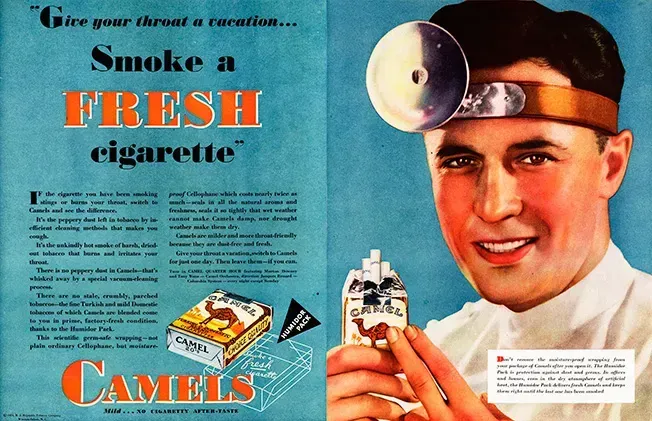
In the 1980s, Philip Morris bought General Foods and then Kraft. R.J. Reynolds bought Nabisco. For about twenty years, the two biggest cigarette companies in America owned much of what America ate, and at one point half of Philip Morris's money came from food.
They brought their methods with them. Researchers at the University of Kansas compared foods owned by tobacco companies during those years against foods that never were. The tobacco-owned ones were far more likely to hit the exact mix of fat, sugar and salt that makes people eat past the point of being full. A follow-up study this year traced how those same companies carried the cigarette playbook into other countries: king-size packs, "light" and "low-fat" versions barely different from the original, and their existing cigarette delivery routes used to push snacks into new markets.
Yes, these companies sold their food businesses off years ago. But the methods stayed, and so did the products.
In February, three researchers published a paper in The Milbank Quarterly laying out how closely the two products match. One of them, Allan Brandt, spent his career writing the history of the tobacco industry, so he knows the playbook when he sees it.
The juice in Tunde's trolley says "no added sugar," and that is true. It is also beside the point, because the World Health Organization counts the sugar already in juice the same way it counts the sugar you add in yourself. The label is technically honest. But it is answering a the wrong question.

In Barbados, a national survey found ultra-processed food makes up 40 per cent of what adults eat in a day, the same level as in America. One in four Barbadians gets half their calories from ultra-processed foods, and most of them are under 45.
In Nigeria and across West Africa the share is still much lower. Instead, we have speed. The fastest growth in sales anywhere in the world is now in countries like Nigeria, not in the countries where this food started. So if you’ve heard that ultra-processed food is already most of what you eat in Nigeria, thankfully that’s not true yet. But the truth might be worse: West Africa is racing there faster than anywhere on earth.
And our bodies are showing it. A study last year pooling 60 Nigerian surveys, covering nearly 125,000 people, found type 2 diabetes in 7 percent of adults, roughly double what the International Diabetes Federation estimated for Nigeria in 2019.
In Britain and America, poorer families eat the most of this food because it is cheaper and easier to find. In Nigeria, the pattern reverses. That same study found that people most likely to have type 2 diabetes were those with more money and living in cities. This may be because wealthier people are more likely to be influenced by Western food culture, are less willing to spend time preparing meals from scratch, or see some UPFs as a status symbol.
In 2019, Kevin Hall kept 20 adults in a research ward for a month. Two weeks eating ultra-processed food, two weeks eating ordinary cooked food, with the same sugar, fat, salt and fibre on offer in both, and they could eat as much as they liked. In the processed weeks, they ate 500 calories more per day and gained weight. Nothing about the people changed. Only the food did.
Last year a team at University College London ran it again, this time making both diets follow official healthy eating advice. People lost weight on both and lost twice as much on the less processed one.
Scientists do still argue about the words. The system that defines "ultra-processed" puts wholemeal bread in the same box as Fanta, which is a bit silly. But that argument is about where to draw the line. The matter of whether the food is doing something to us is already settled.
Read the front of the pack as advertising and the back as information. When a pack shouts one good thing at you, ask what it is not shouting.
Buy food that does not need a claim on it. Cook on a Sunday so you still have something to eat by Wednesday. Do that and you will eat better this month than you did last month.
What it will not do is change the aisle. That job belongs to people with far more power than any shopper has, and pretending it belongs to shoppers is how we got here. Nigeria taxes sweet drinks at ten naira a litre and has no warning labels on the front of packs. Barbados taxed sugary drinks in 2015, and sales fell by 4.3 percent, though shoppers moved down to cheaper sugary brands rather than away from sugar, which is what happens when a tax is set too low. South Africa set a proper tax and purchases dropped 29 percent in the first year. Across the Caribbean, the octagonal warning label that Chile and Mexico already put on packs has been stuck in draft at CARICOM for years while the industry lobbies against it.
We banned cigarette adverts. We put warnings on the packet. We did not do it by asking smokers to try harder.
On Monday morning, Tunde will pour that cereal into two bowls, his daughters will eat it, and he will feel good about Saturday. By the standards of the aisle he was standing in, he chose well.
The aisle is the problem.